Tuesday, July 05, 2011

Rand & Aesthetics 19

Photography. Ayn Rand, to the bewilderment of photographers everywhere, denies that photography is an art:

A certain type of confusion about the relationship between scientific discoveries and art, leads to a frequently asked question: Is photography an art? The answer is: No. It is a technical, not a creative skill. Art requires a selective re-creation. A camera cannot perform the basic task of painting: a visual conceptualization, i.e., the creation of a concrete in terms of abstract essentials. The selection of camera angles, lighting or lenses is merely a selection of the means to reproduce various aspects of the given, i.e., of an existing concrete. There is an artistic element in some photographs, which is the result of such selectivity as the photographer can exercise, and some of them can be very beautiful -- but the same artistic element (purposeful selectivity) is present in many utilitarian products: in the better kinds of furniture, dress design, automobiles, packaging, etc. The commercial work in ads (or posters or postage stamps) is frequently done by real artists and has greater esthetic value than many paintings, but utilitarian objects cannot be classified as works of art.

(If it is asked, at this point: But why, then, is a film director to be regarded as an artist? -- the answer is: It is the story that provides an abstract meaning which the film concretizes; without a story, a director is merely a pretentious photographer.) [RM, 74]

Beyond demonstrating her lack of specific knowledge about photography, this passage also shows the weakness of her theory of definitions. Much of Rand's argument against photography as art stems from her entirely arbitrary definition of art as "selective recreation." Of course, Rand would deny that her definitions are arbitrary; yet they are. Definitions merely define what people mean by the words they use. They are usually social conventions in that they arise from the attempts of many individuals to make their meanings understood by other people. There is no such thing as a right or wrong definitions: there are merely definitions excepted by most people and definitions accepted only by individuals or eccentric groups (e.g., Objectivist definitions). Generally speaking, it's best to follow standard usage in the use words; otherwise, the chances of being misunderstood will tend to increase, sometimes dramatically.

Rand wants to believe that art requires selective recreation. She tries to defend this point of view by emphasizing the importance of selecting only those concretes that are "abstract essentials." This touches upon another fallacious aspect of Rand's view definitions, words, and concepts: her essentialism. Since Rand never provided a convincing explanation of how to distinguish an "essential" from a non-essential abstraction, her essentialism merely becomes a cover for her arbitrary assertions. The essential is whatever Rand declares to be essential. Once Rand grants herself the exclusive right to determine what is essential, she can arbitrarily dismiss any type or genre of art as non-art on the grounds that it concretizes "non-essential" abstractions.

Friday, July 01, 2011

A Reading List For Open Minded Objectivists

Regular Contributor Neil Parille reaches out to Objectivists whose Rand sycophancy is not at the meter busting level

If you’ve taken ARCHNblog’s “Are You A Rand Cultist?” test and are in the 1-6 range, there might be a chance that with some good reading material that you can get a better perspective on Rand. If you are in the 7-12 range some intensive deprogramming is necessary. I would never recommend kidnapping Randroids and locking them in rooms while deprogrammers try some reverse mind control, but as a public service I’ll provide links to books and on-line material that might help unclog the minds of otherwise rational Objectivists.*

For basic critiques of Objectivism, check out this blog's eponymous Ayn Rand Contra Human Nature. Nyquist subjects Objectivism’s central claims to empirical enquiry. Many of Rand’s assertions about society and human nature don’t measure up. For a different take on Objectivism, check out Scott Ryan’s Objectivism and the Corruption of Rationality, a work that critiques Rand’s epistemology from a more traditional philosophic perspective.

For Rand’s theory of concept formation, see Bryan Register’s discussion of various problems in his 2000 Journal of Rand Studies essay. For a critique of essentialism, check out Karl Popper’s “Two Kinds of Definitions.” For a defense of essentialism, read David Oderberg’s Real Essentialism.

Monday, June 27, 2011

Rand & Aesthetics 18

Rand on rock music. While Rand was well known for being outspoken to the point of palpable rudeness, she could become, when she wanted to, as indirect and suggestive as the very worst of equivocators. Her assault on rock music begins with a series highly speculative, empirically impoverished remarks on what she calls "primitive" music:
The deadly monotony of primitive music -- the endless repetition of a few notes and of a rhythmic pattern that beats against the brain with the regularity of the ancient torture of water drops falling on a man's skull -- paralyzes cognitive processes, obliterates awareness and disintegrates the mind. Such music produces a state of sensory deprivation, which -- as modern scientists are beginning to discover -- is caused by the absence or the monotony of sense stimuli....

Friday, June 24, 2011

Friday Night Whim-Worshipping 2.


Seeing commenter A was in the mood for something a little denser, we are happy to oblige. Update: Seemed a bit glitchy, so here's the second part.

Tuesday, June 21, 2011

Rand & Aesthetics 17

Rand on "modern music." Ayn Rand's most extended published take on "modern music" appears in her "Art and Cognition" essay. It features all the usual Randian intellectual vices: tendency toward over-generalization, vagueness, lack of specific examples, and condemnation via implicit suggestion and innuendo:


A brief word about so-called modern music: no further research or scientific discoveries are required to know with full, objective certainty that it is not music. The proof lies in the fact that music is the product of periodic vibrations -- and therefore, the introduction of nonperiodic variations (such as the sounds of street traffic or of machine gears or of coughs and sneezes), i.e., of noise, into an allegedly musical composition eliminates it automatically from the realm of art and of consideration. But a word of warning in regard to the vocabulary of the perpetrators of such "innovation" is in order: they spout a great deal about the necessity of "conditioning" your ear to an appreciation of their "music." Their notion of conditioning is unlimited by reality and by the law of identity; man, in their view, is infinitely conditionable. But, in fact, you can condition a human ear to different types of music (it is not the ear, but the mind that you have to condition in such cases); you cannot condition it to hear noise as if it were music; it is not personal training or social conventions that make it impossible, but physiological nature, the identity, of the human ear and brain. [RM, 64]

Rand here suggests (without explicitly saying so) that one of the distinctive characteristics of "modern music" is that it lacks "nonperiodic variations" (e.g., sounds of traffic, coughing, etc.). Now the phrase "modern music," in common parlance, covers a wide range of styles, from "impressionists" such as Ravel and Debussy all the way to hard-core serialists like Boulez and Elliot Carter. Since Rand mentions no names, it's not clear whose music she is referring to as "modern." While it is true that, in the sixties and seventies, there existed a brief vogue to introduce taped noises into what were otherwise musical compositions, outside of John Cage, I don't know of any composer of any notoriety who attempted to put forward a musical composition that was made up entirely of "nonperiodic variations" (i.e., noise). This leads to another potential confusion. Is Rand suggesting that the introduction of any noise into a musical composition renders the whole composition, music and all, as "non-art"? Orchestras sometimes accompany the closing bars of Tchiakovsky's 1812 Overture with sounds of canon fire. Do these non-periodic vibrations render the 1812 Overture as non-art? Or how about a musical work that includes a narrator? Is Prokofiev's Peter and the Wolf non-art? What about compositions which use "non-pitched" percussion instruments, such as bass drum, castenets, cymbals, whips and snare drums? At least half (and probably more) of the orchestral repertoire uses such percussion. Is half the orchestral repertoire made up of works which must automatically be eliminated "from the realm of art and of consideration" because of the use of instruments that produce non-periodic vibrations?

In her haste to find a pretext for calling "modern" music non-art, Rand, in her carelessness, has once again presented a hollow argument. It may be annoying and even aesthetically viscious for avant-garde composers to introduce taped sounds of machine and street noises into their musical compositions. But that, in itself, doesn't render the musical portions of such compositions any less musical. Before one denounces a given aesthetic style, one at least has to take the trouble to understand that style. Otherwise, one comes off as prejudiced rather than insightful, as an aesthetic ignoramus rather than a knowledgable critic.

Friday, June 17, 2011

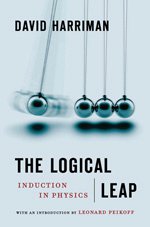
Notes On Cultism in The Logical Leap: Why Anonymous Objectivists Can't Read.

In reply to this post, an Anon Rand fan writes:
I see that Daniel Barnes is still doing his dishonest blathering.

He writes: “On p26, Harriman claims that, using this unique Randian inductive method, from a single observation of paper burning in a fireplace, we can conclude that the statement "Fire burns paper" is "a universal truth".”

Other than Harriman writing "Fire burns paper" on p. 26, Barnes is a liar. Harriman uses "fire burns paper" to describe a child learning this generalization for the first time. He describes it as a “statement of a concrete observation”. He does not say it is a single instance nor present it as a universal truth or “Every S is P”. Children at that age don’t think in terms such as “some”, “every” or “all.” Eventually most children, even ones as stupid as Barnes, will learn there are exceptions, for example, paper that is water-soaked. This is such common knowledge there was no need for Harriman to say so, except to foil a dishonest critic like Barnes.
Here at the ARCHNblog we have become accustomed to being called liars, dishonest etc by boldly anonymous Randians. We are also equally accustomed to said Objectivists drying up and blowing away when challenged to provide proof of our supposed four-flushing malfeasances.

As I'm traveling and don't have the book handy, I've nonetheless googled it and found the passage I was referring to reproduced over at the Objectivist Living forum:
In utilizing concepts as his cognitive tools, [the first-level inducer] is thereby omitting the measurements of the particular causal connection he perceives. "Fire" relates the yellow-orange flames he perceives to all such, regardless of their varying measurements; the same applies to "paper" and the process of "burning." Hence the first statement of his concrete observation: "Fire burns paper." This statement is simply a conceptualization of the perceived data--which is what makes it a generalization.

Notice that when our first-level inducer identifies a perceived causal connection in words, he does not do it as a description of unique concretes, even though that is all he perceives; he at once states a universal truth.
- David Harriman, p26, The Logical Leap.
Readers can compare our Anon's claim with the actual passage themselves. But to me it's obvious not only that what Anon doesn't know about the problem of induction could be written in 6 point type over Fenway Park, but that these "New Intellectuals" seem to lack some basic reading skills.

Thursday, June 16, 2011

Rand & Aesthetics 16

Rand's aesthetic judgments about music. We get the full sense of the subjective and arbitrary character of Rand's aesthetics when we glance at Rand's pronouncements about specific composers. These pronouncements are often so thin and baseless that it their basis in sheer egotistic prejudice should be obvious.

On Beethoven:
I'll tell you what I hear in [Beethoven's] music as [in his] philosophy of life. With regard to Beethoven, I am profoundly opposed to his music,, specifically from the sense-of-life aspect. Esthetically, I can hear that he is a great musician. I have to acknowledge the skill with which he is presenting what he is presenting. But his music has what I call a malevolent universe. It is in essence the view that man is doomed, that he has no chance, that he cannot achieve his goals, that he cannot triumph on earth -- but must struggle just the same.... It's the belief that man must struggle even though he has no chance of winning, and that he must perish heroically. That is a malevolent view of man and of the universe, and that is what I hear in practically everything Beethoven has written.
There's already been a discussion on this site about the absurdity of Rand's assertions concerning Beethoven's alleged malevolence, so there's no need to go into great detail here. In any case, since few if any admirers of Beethoven find him to be malevolent, that should be enough to settle the question. Rand is merely trying to justify her dislike of a composer that even she has to admit is a "great musician."

On Wagner:
I think Wagner, unfortunately, is enormously vulgar, so that a sense-of-life appraisal is almost irrelevent. There is a certain musical value in some of his compositions. I would not classify him as particularly great. His melodies, which are the element by which I principally judge a composer, are, are enormously lacking in originality or inventiveness. If you strip them of all their trimming, his melodies are, with rare exceptions, street-organ or circus music. What Wagner makes his reputation on is precisely the trimmings -- the technical, alleged virtuosity of his orchestrations, with a dozen leitmotifs all mixed together, amounting to nothing. It is not a profound view of life. It is the view of a manipulator, of somebody who is playing on the fringes, but does not really have much to say.

This passage proves, more than any other, that when it comes to serious music, Rand was in way over her head. Classical musicians (i.e., those who are in the best position to judge) generally regard Wagner as one of the greatest composers. They would look upon Rand's criticisms of Wagner as ignorant and deeply prejudiced. Rand's avowal that she principally judges composer by their melodies would inspire deep contempt (the most important element in serious music tends to be harmony, not melody). Her assertion that most of Wagner's melodies are "street-organ" and "circus" music would yield howls of derision. And what is this comment about Wagner's "alleged virtuousity of orchestration": since when is Rand an expert on orchestration?This is, to be entirely frank, very embarrassing stuff; and the fact that Rand seems entirely oblivious as to how foolish she is coming off only makes it that much more cringe worthy.

On Gilbert and Sullivan:
I can't stand them.... I am positively allergic to their operattas, both to the content and to the music, but particularly the music. The content is often very clever and witty, but the sense of life projected is so satirically anti-man, that there isn't a redeeming feature anywhere. It is as if Gilbert and Sullivan were laughing at everything about man. And therefore, the sound of their music makes me uncomfortable.
The odd thing here is that, even though the (alleged) "laughing at man" is entirely the product of Gilbert, that Rand objects "particularly" to Sullivan's music. If she knew nothing of Gilbert's librettos, would she still have objected to Sullivan's music?

Rand is also known to have referred to Mozart as "pre-music" and to have regarded an acquaintance who admired Richard Strauss as someone with whom she could never be "soul mates." One shudders to think what Rand would have thought of Debussy, Elgar, Mahler, and countless others of whom she was too ignorant to disparage.

Monday, June 13, 2011

Rand & Aesthetics 15

Rand's theory of music. Rand's views on music reveal far more about her basic modus operandi than they do about music. Her theory explaining the "nature of man's response music" is unique in with Objectivism in that Rand recognized it as being a mere hypothesis. Yet even this very recognition is fraught with difficulties. It has that character (so prominent amongst Rand's philosophy) of manifesting a heads-I-win,-tails-you-lose dynamic. For Rand's basic, default attitude toward music was: I am right, but I can't prove it. In other words, we are supposed to give her credit for acknowledging she couldn't prove her theory, yet she did not consider herself obliged to admit she might be wrong. She really does seem to be trying to have it both ways.

Given that her "hypothesis" about music appears no better or worse than any of her other theories, it is difficult to explain why she would consider it a mere hypothesis. Rand's theories of concepts and value are also mere hypotheses. Her attempts to "prove" or "validate" them are no more convincing than her hypothesis about music. So why did she recognize the hypothetical character of her theory of music while ignoring the fact that the rest of her philosophy was also hypothetical?

Oddly enough, her theory of music at least attempts to make use of scientific evidence (which cannot be said of most of her other theories). To be sure, the scientific evidence she references is very old: namely, Helmholtz's 1863 Die Lehre von den Tonempfindungen als physiologische Grundlage für die Theorie der Musik (On the Sensations of Tone as a Physiological Basis for the Theory of Music),

Saturday, June 11, 2011

Notes On Cultism In the Logical Leap 3: The Stupid, It Burns!

I was expecting The Logical Leap: Induction In Physics to be really, really terrible, and I have not been disappointed. Just to get a good handle on how it serves as a dutiful cultic delivery vehicle for Rand's immaculate conceptions I've had to go back to the ITOE, and it takes a while to extract any clarity from that shambles. I'll type that up soon. But to sum up TLL, where it does not merely consist of warmed over Randian tripe, is basically an exercise in philosophic Calvinball with Harriman straining to retrofit the giants of Enlightenment science into Team Objectivism. Of course, this would be a complete intellectual embarrassment if not for the fact that such Objectivists have no shame.

As for the Harrikoffrand arguments themselves, that will have to be a separate, eyerolling post. Suffice to say for now that we might judge how good they are by the quality of their conclusions, so I now present an example of the amazing power of Objectivist "induction". On p26, Harriman claims that, using this unique Randian inductive method, from a single observation of paper burning in a fireplace, we can conclude that the statement "Fire burns paper" is "a universal truth".

Wednesday, June 08, 2011

Tuesday, June 07, 2011

A "Necessary Connection"?

At bottom, Objectivist epistemology is based on a fundamental fallacy which leads at first to verbalism and then to an authoritarian turn. This fallacy, often difficult to unpack, is clearly expressed here (my italics):
"And, lastly, I suggest that you try to project what would have happened if, instead of Annie Sullivan, a sadist had taken charge of Helen Keller’s education. A sadist would spell “water” into Helen’s palm, while making her touch water, stones, flowers and dogs interchangeably; he would teach her that water is called “water” today, but “milk” tomorrow; he would endeavor to convey to her that there is no necessary connection between names and things, that the signals in her palm are a game of arbitrary conventions and that she’d better obey him without trying to understand."
- Ayn Rand, “Kant Versus Sullivan,” Philosophy: Who Needs It p90.
A truly remarkable thing to write, and to think.

Monday, June 06, 2011

Rand & Aesthetics 14

Style and "psycho-epistemology." With her over-emphasis on selectivity, her sense of life construct, and her invidious distinction between Romanticism and Naturalism, Rand has plenty of tools to criticize aesthetic tastes she didn't approve of (i.e., nearly any taste she did not share). She had yet one tool her aesthetics that she could make use of to flog art she despised: namely, style as it relates to "psycho-epistemology." According to Rand:
The subject of an art work expresses a view of man’s existence, while the style expresses a view of man’s consciousness. The subject reveals an artist’s metaphysics, the style reveals his psycho-epistemology . . . .

An artist’s style is the product of his own psycho-epistemology—and, by implication, a projection of his view of man’s consciousness, of its efficacy or impotence, of its proper method and level of functioning.

Predominantly (though not exclusively), a man whose normal mental state is a state of full focus, will create and respond to a style of radiant clarity and ruthless precision—a style that projects sharp outlines, cleanliness, purpose, an intransigent commitment to full awareness and clear-cut identity—a level of awareness appropriate to a universe where A is A, where everything is open to man’s consciousness and demands its constant functioning.

A man who is moved by the fog of his feelings and spends most of his time out of focus will create and respond to a style of blurred, "mysterious" murk, where outlines dissolve and entities flow into one another, where words connote anything and denote nothing, where colors float without objects, and objects float without weight—a level of awareness appropriate to a universe where A can be any non-A one chooses, where nothing can be known with certainty and nothing much is demanded of one’s consciousness.
With this weapon in her aesthetic arsenal, Rand can make some startling pronouncements about various styles of painting:

Style is the most complex element of art, the most revealing and, often, the most baffling psychologically. The terrible inner conflicts from which artists suffer as much as (or, perhaps, more than) other men are magnified in their work. As an example: Salvador Dali, whose style projects the luminous clarity of a rational psycho-epistemology, while most (though not all) of his subjects project an irrational and revoltingly evil metaphysics. A similar, but less offensive, conflict may be seen in the paintings of Vermeer, who combines a brilliant clarity of style with the bleak metaphysics of Naturalism. At the other extreme of the stylistic continuum, observe the deliberate blurring and visual distortions of the so-called "painterly" school, from Rembrandt on down—down to the rebellion against consciousness, expressed by a phenomenon such as Cubism which seeks specifically to disintegrate man’s consciousness by painting objects as man does not perceive them (from several perspectives at once).

Much of the psychological bafflement Rand confesses to arises out of her definition of art. It's from Rand's own insistence that art is a "selective recreation of reality" that so many of her invidious conclusions about art, particularly modern art, arise. After all, on what basis does Rand justify her conclusion that individuals who respond to "blurred mysterious murk" (presumably this is Impressionist and non-representional art) spend most of their time "out of focus." What evidence does she have to support so implausible a contention?

Art is not merely a selective recreation of reality. It is the creation of something that leads to an aesthetic experience. Nor is there any evidence that an artist's style necessarily reveals the degree to which his mind is in or out of focus. Impressionist painting was driven, in part, by the desire to paint, not in a studio, but outdoors. This encouraged painters to adopt quicker methods of composition, in which the painstaking attention to detail was replaced by bold strokes and emphasis on color. The Impressionists were generalists seeking to capture the "essentials" of a scene: just what Rand claimed to do in her philosophy; only the Impressionists had a much greater excuse than Rand, as they were merely trying to convey light and beauty, not information or philosophical truth.

I suspect that one of the main draws of Rand's aesthetics is that it provides an uncompromising condemnation of "modern" art. Such modernism, Rand implies, is a "rebellion against consciousness." Cubism, in particular, "seeks specifically to disintegrate man's consciousness by painting objects as man does not perceive them." Oh really? How does Rand know such a thing? Using the same logic, couldn't something very similar be said about emoticons and smilies? or stick figure illustrations? or any graphical representation that isn't absolutley photographic in its representation? While there is absolutely nothing wrong in deploring modern art, if one wishes to criticize it, one must do better than this.

Wednesday, June 01, 2011

Rand & Aesthetics 13

Style in literature. Rand's remarks on literary style begin rather innocuous and vague, but quickly take on more sinister connotations once she applies them as tools of criticism:


A literary style has two fundamental elements (each subsuming a large number of lesser categories): the "choice of content" and the "choice of words." By "choice of content" I mean those aspects of a given passage (whether description, narrative or dialogue) which a writer chooses to communicate (and which involve the consideration of what to include or to omit). By "choice of words" I mean the particular words and sentence structures a writer uses to communicate them.

For instance, when a writer describes a beautiful woman, his stylistic "choice of content" will determine whether he mentions (or stresses) her face or body or manner of moving or facial expression, etc.; whether the details he includes are essential and significant or accidental and irrelevant; whether he presents them in terms of facts or of evaluations; etc. His "choice of words" will convey the emotional implications or connotations, the value-slanting, of the particular content he has chosen to communicate. (He will achieve a different effect if he describes a woman as "slender" or "thin" or "svelte" or "lanky," etc.)

None of this is particularly objectionable or particularly insightful. The main criticism that could be essayed against it is that, in the hands of a malicious critic, the importance of a writer's style could be exaggerated and used as a pretext to malign great works of literature. Many of the greatest novelists were not particularly adept stylists. These include such writers as Stendhal, Dostoevsky, Dickens, Melville, Dreiser, and Faulkner, among others.

Rand proceeds to trot out two passage allegedly describing New York, one written by Mickey Spillane, the other by Thomas Wolfe. I say allegedly because the Wolfe passage is not really a description of New York, but rather, a description of the emotions stirred up within Wolfe's protagonist by the sight of New York. Rand, ignoring this distinction, concludes: "Wolfe's style is emotion-orientated and addressed to a subjective psycho-epistemology: he expects the reader to accept emotions divorced from facts, and to accept them second-hand."

The key term here is "subjective psycho-epistemology." In Objectivism, the term subjective has the same moral connotations as the term Satan has for a Christian fundamentalist. It is indicative of the deepest, most unregenerate evil. By claiming that Wolfe's works are "addressed" to a "subjective psycho-epistemology," Rand is suggesting that admirers of his work are afflicted with this very same subjectivism, and are perhaps deserving of psychological counseling, if not outright moral condemnation. Does Rand have any grounds for ascribing subjectivism (in the disparaging sense of the word) to Wolfe's admirers?

No, she doesn't. Wolfe presents a target-rich environment for the critic, because he was an immensely talented writer who often, alas, had nothing of any great importance to say. The best he could achieve was to write very eloquently (sometimes over-eloquently) of his own trivial thoughts, emotions, and experiences. Since many young people share or can relate to Wolfe's thoughts, emotions, and experiences, they are drawn to the grandiloquent poetry in which he expresses them. There is nothing in any of this to draw the sinister conclusion that Wolfe appeals to those afflicted with subjective psycho-epistemologies. All literature, to the extent that it appeals to emotions (and what literature doesn't appeal to the emotions?), appeals to the "subjective."

Rand takes her principle to even more questionable extremes when she writes:


Style is not an end in itself, it is only a means to an end—the means of telling a story. The writer who develops a beautiful style, but has nothing to say, represents a kind of arrested esthetic development; he is like a pianist who acquires a brilliant technique by playing finger-exercises, but never gives a concert.

The typical literary product of such writers—and of their imitators, who possess no style—are so-called "mood-studies," popular among today’s literati, which are little pieces conveying nothing but a certain mood. Such pieces are not an art-form, they are merely finger-exercises that never develop into art.

While Rand is correct that style is not an end in itself, this doesn't mean that "mood-studies" are not an art-form. What is a lyric poem, but a "mood study"? Why shouldn't a lyric poem (or a lyrical short story) not be a work of art? We once again are confronted with an example of Rand making sweeping pronouncements about issues she doesn't know much about and hasn't thought through.

Thursday, May 26, 2011

Rand & Aesthetics 12

Plot-theme. Rand introduces yet another poorly thought out aesthetic construct. She explains "plot-theme" as follows:
A cardinal principle of good fiction [is]: the theme and the plot of a novel must be integrated—as thoroughly integrated as mind and body or thought and action in a rational view of man.The link between the theme and the events of a novel is an element which I call the plot-theme. It is the first step of the translation of an abstract theme into a story, without which the construction of a plot would be impossible. A "plot-theme" is the central conflict or "situation" of a story—a conflict in terms of action, corresponding to the theme and complex enough to create a purposeful progression of events.
The theme of a novel is the core of its abstract meaning—the plot-theme is the core of its events. Where is the incoherency in this idea? It stems from how Rand utilizes it in her criticism of novels she doesn't like. Consider what she says about Dreiser's An American Tragedy:
A related, though somewhat different, example of a bad novel is An American Tragedy by Theodore Dreiser. Here, the author attempts to give significance to a trite story by tacking on a theme which is not related to or demonstrated by its events. The events deal with an age old subject: the romantic problem of a rotten little weakling who murders his pregnant sweetheart, a working girl, in order ... to marry a rich heiress. The alleged theme, according to the author's assertion, is: "The evil of capitalism."
Rand here commits the error of confusing the author's intended theme with the actual theme manifested in the author's story. In other words, Dreiser's alleged theme is entirely irrelevant to the merit (or lack of merit) of An American Tragedy. Even if that novel fails to demonstrate the evils of capitalism, that in itself wouldn't make it a "bad novel." The integration of theme and plot is entirely irrelevant. Every plot will have a theme, regardless of the author's intentions. Since every story has a theme, integration of theme and plot is a built in feature. It works regardless of what the author intended. Indeed, the author's intentions are of no consequence whatsoever; what is important is the final result. A novel cannot be judged because it turned out different from what the author originally intended. If Dreiser had never claimed that the theme of An American Tragedy was "The evil of capitalism," none of us would be any the wiser and Rand could not have used the work as an example of a bad novel that misintegrates the theme and the plot.

Wednesday, May 25, 2011

Do They Just Make This Stuff Up?

We here at the ARCHNblog have long said that Rand's arguments are so intensely confused even her devotees are unable to extract coherent positions from them. Take the case of her "intellectual heir" Leonard Peikoff. After triggering doctrinal firestorms over denying Muslims property rights, voting Democrat, and nuking Iran under the doctrine of collective responsibility, he's now come out in favour of compulsory jury duty. And what is his Objectivist argument for initiating force against free citizens, something expressly forbidden by Objectivism? Amy Peikoff summarises it simply: it is just, well, "something you agree to when you agree to live under the government."

Uh-huh. Rather like taxation.

Monday, May 23, 2011

Ayn Rand & Aesthetics 11

Plot and character. When asked to name the three most important elements in fiction, Rand replied, "Plot, plot, plot." For Rand, a plot "is a purposeful progression of logically connected events leading to the resolution of a climax" and explicated this statement as follows:
The word “purposeful” in this definition has two applications: it applies to the author and to the characters of a novel. It demands that the author devise a logical structure of events, a sequence in which every major event is connected with, determined by and proceeds from the preceding events of the story—a sequence in which nothing is irrelevant, arbitrary or accidental, so that the logic of the events leads inevitably to a final resolution.
Rand's emphasis on "logical" sequence of events is problematic. No sequence of events is ever "logical." Logic applies to arguments, to propositions. There may exist, for example, a logical sequence of propositions. A sequence of events may be causally connected, but they cannot, on the face of it, be connected by logic. One event is never deduced from another. Rand here is confusing logic with inevitability.

But why is this sort of inevitability of events so important? Rand explains:

A chronicle, real or invented, may possess certain values; but these values are primarily informative—historical or sociological or psychological—not primarily esthetic or literary; they are only partly literary. Since art is a selective re-creation and since events are the building blocks of a novel, a writer who fails to exercise selectivity in regard to events defaults on the most important aspect of his art.
However, all this merely begs the question, leaving us as ignorant as we were before. Why must only inevitable events be regarded "esthetic and literary," whereas non-inevitable events are merely "informative." Rand has failed to provide a compelling argument for the importance of plot in fiction. Are there compelling arguments for other elements? In a word, yes.

Consider, as an alternative view, what H. L. Mencken had to say of the novel:
In brief, a first-rate novel is always a character sketch. It may be more than that, but at bottom it is always a character sketch, or, if the author is genuinely of the imperial line, a whole series of them…
The moral of all this is not lost upon the more competent minority of novelists among us. It was not necessary to preach it to Miss Cather when she set out to write "My Antonia,"… nor to Sinclair Lewis when he was at work on "Babbitt." All such novelists see the character first and the story afterword. What is the story of "Babbitt"? Who remembers? Who, indeed, remembers the story of "The Three Musketeers"? But D'Artagnan and his friends live brilliantly, and so, too, will George F. Babbitt live brilliantly — at all events, until Kiwanis cease to trouble, and his type ceases to be real. Most of the younger American novelists, alas, seem to draw no profit from such examples. It is their aim, apparently, to shock mankind with the vivacity of their virtuosity and the heterodoxy of their ideas, and so they fill their novels with gaudy writing and banal propaganda, and convert their characters into sticks. I am, at times, immensely amused and sometimes I am instructed, but I seldom carry away anything to remember. When I do so, it is not an idea, but a person. Like everyone else, I have a long memory for persons. But ideas come and go. [Prejudices 5, "Essay on Pedagogy"]
Now whether Mencken is right, he at least give a compelling argument for his position: namely, interesting characters are more memorable than stories or plots. And if one examines the novels that are remembered and read generations after they are written, they are all character sketches of some sort or another. They may be a great deal more than that; but few novels survive merely on plot alone.

Rand's view makes every element of narrative fiction subservient to plot:
The plot of a novel serves the same function as the steel skeleton of a skyscraper: it determines the use, placement and distribution of all the other elements. Matters such as number of characters, background, descriptions, conversations, introspective passages, etc. have to be determined by what the plot can carry, i.e., have to be integrated with the events and contribute to the progression of the story.
In practice, this sort of outlook turns characters into mere plot devices. The practical consequence of the sort of plot-driven fiction would be novels populated by unmemorable one-dimensional stick figures. Such novels may survive, as Rand's own Atlas Shrugged has thus far survived, for it's value as an instrument of propaganda; but as literature, it will be scorned and (probably) forgotten. Even as propaganda, it's value is close to nil, because only those who already agree with the message are likely to read and appreciate it. If Rand had really wanted to get her message out and achieve something beyond merely preaching to the choir, she would have striven for Atlas to be character-driven, rather than a plot driven, book. Then, assuming it was well done, intelligent people would have read it, even if they didn't agree with its message. One of the distinguishing characteristics of great literature is that intelligent people will read it even if they don't agree with author's view. Consider, as one example, the novels of Tolstoy. Many people can read and enjoy War and Peace and Anna Karenina without agreeing, or even respecting, Tolstoy's rather eccentric political and social views.

Saturday, May 21, 2011

Saving The Appearances 2: Notes on Cultism in "The Logical Leap"


If "The Logical Leap" is a Rand-cult book, we should expect it to conform strictly to the Prime Directive of cultism: that the Ayn Rand is the greatest individual that ever lived. Rand-cult books like James Valliant's "The Passion of Ayn Rand's Critics" are written to promote the moral supremacy of Ayn Rand; "The Logical Leap" to promote her intellectual and philosophical supremacy.

However just as the insurmountable conflicts between the Prime Directive and reality forced Valliant's book into sycophantic absurdity, this case presents enormous problems for the true believer. For unlike the problem of universals, or the "is/ought" problem, which Rand claimed to have solved (even though it seems that she neither solved, nor even understood them), with the problem of induction she is on record as stating she had not solved it, and had not even begun to do so.

Friday, May 20, 2011

Saving the Appearances: Notes on Cultism In "The Logical Leap"


Before we look at the highly cultic nature of "The Logical Leap", I'd better explain some of the mechanisms a typical cult uses to function.

Based on his experiences with survivors of Chinese Communist re-education programs, in the early 60s psychologist Dr Robert J. Clifton developed what he called the "Eight Criteria For Thought Reform" - a set of methods for moulding individuals to fit a given ideology. He soon realised that these programs closely resembled those of the plethora of different cults from the Children of God to EST to Scientology that sprang up in America during the '60s counterculture revolution.

Almost all of the eight have some relevance to Objectivism. However, the three key ones for the purposes of this discussion are as follows:

Thursday, May 19, 2011

Inside The Cultist Mind: 2


So anyway, I finally got around to getting a copy of David Harriman's "The Logical Leap: Induction In Physics". I've been in no hurry because, not unlike Atlas Shrugged: The Movie, everything I'd read about it pointed towards it being a typical Objectivist trainwreck.

I've started into it and already it is clear the book has nothing to add to the well-known problem of induction. Nothing, nada, zip, nil, zero, nah-thing. I will be amazed if I can encounter in it a single argument that has not been made, and debunked, at at least 70 years before and more like 150 - the only detectable difference being that this old wine will have been rebottled in Rand's obscurantist Objectivist jargon. Hence reviewing it solely for the purpose of examining Harriman's alleged arguments, though I will touch on these, seems even beyond my considerable tolerance for thankless tasks.

However, what is interesting is not what the book says, but the way Harriman says it. My initial impression of "The Logical Leap" is that, like James Valliant's "The Passion of Ayn Rand's Critics", it's an epic fail in everything it sets out to do, either as argument, or history, or both. But what makes Valliant's demented tome indispensable is precisely its idiocies; with "TPARC" Valliant unwitting gives us, with MRI-like clarity, a fascinating look inside the Rand-cultist's mind. "The Logical Leap" appears to offer us the more of the same.

Tuesday, May 17, 2011

Rand and Aesthetics 10

Naturalistic Romanticism. Rand introduces one other category of hybrid Romanticism in addition to Byronism, as explained in the following passage from The Romantic Manifesto:

Going farther down, one can observe the breakup of Romanticism, the contradictions that proceed from a premise held subconsciously. On this level, there emerges a class of writers whose basic premise, in effect, is that man possesses volition in regard to existence, but not to consciousness, i.e., in regard to his physical actions, but not in regard to his own character. The distinguishing characteristic of this class is: stories of unusual events enacted by conventional characters. The stories are abstract projections, involving actions one does not observe in "real life," the characters are commonplace concretes. The stories are Romantic, the characters Naturalistic. Such novels seldom have plots (since value-conflicts are not their motivational principle), but they do have a form resembling a plot: a coherent, imaginative, often suspenseful story held together by some one central goal or undertaking of the characters.

The contradictions in such a combination of elements are obvious; they lead to a total breach between action and characterization, leaving the action unmotivated and the characters unintelligible. The reader is left to feel: "These people couldn't do these things!"

With its emphasis on sheer physical action and neglect of human psychology, this class of novels stands on the borderline between serious and popular culture. No top-rank novelists belong to this category; the better known ones are writers of science fiction, such as H. G. Wells or Jules Verne. (Occasionally, a good writer of the Naturalistic school, with a repressed element of Romanticism, attemps a novel on an abstract them that requires a Romantic approach; the result falls into this category. For example, Sinclair Lewis's It Can't Happen Here.) It is obvious why the novels of this category are enormously unconvincing. And, no matter how skillfully or suspensefully their action is presented, they always have an unsatisfying, uninspiring quality.


Monday, May 16, 2011

What I Learned From Parodying "Atlas Shrugged"

Ellis Weiner, author of the excellent parody Atlas Slugged: AGAIN neatly skewers the novel's, and the movement's, epic pretensions.

"It was like shooting fish in a barrel, yes." says Weiner, "But somebody has to shoot them."

Thursday, May 12, 2011

Rand and Aesthetics 9

"Byronic" Romanticism. With Rand's division of free will into two parts, one pertaining to consciousness and the other to existence, she proceeds to develop a second category of Romanticism:


There are Romanticists whose basic premise, in effect, is that man possesses volition in regard to consciousness, but not to existence, i.e., in regard to his own character and choice of values, but not in regard to the possibility of achieving his goals in the physical world. The distinguishing characteristics of such writers are grand-scale themes and characters, no plots and an overwhelming sense of tragedy, the sense of a “malevolent universe.” The chief exponents of this category were poets. The leading one is Byron, whose name has been attached to this particular, “Byronic,” view of existence: its essence is the belief that man must lead a heroic life and fight for his values even though he is doomed to defeat by a malevolent fate over which he has no control.
The problem with this category is (1) the vagueness of its terms, and (2) lack of specific examples. Because of these two issues, it's difficult to determine where this category is applicable. Keep in mind that, initially, Rand claimed that Romanticism could be distinguished from Naturalism through the literary device of a plot. But here we have a type of Romaticism that is plotless. So how does one distinguish Byronic Romanticism from Naturalism?

The Byronic Romantics, Rand tells us, adopt grand-scale themes and characters. Yet so does Shakespeare in his tragedies. Why is Shakespeare not a Byronic Romantic? Rand's attempt to use the issue of volition-orientation to analyze literature again demonstrates the futility of viewing narrative works through this particular prism. Except in extreme cases (e.g., Zola for instance, who is explicit in his determinism), the issue of volition versus determinism is not applicable to literature. Most serious novelists and dramatists seek to create characters and narratives that are believable. Whether their characters are "grand-scale" or not, they are nonetheless drawn in the hope of being compelling and believable manifestations of human nature. And why should any believable representation of human nature be equated with determinism?

Curiously, Rand's equation of "journalistic" descriptions of human beings with "Naturalism" implies that a scrupulously realistic portrayal of human nature supports determinism. Why should this be so? Most likely, Rand would have tried to circumvent this troublesome implication by drawing on her selectivity principle. Yet this merely demonstrates the poverty of Rand's selectivity principle. If you are determined to over-interpret a work of art, you can read anything into it that you like. But in criticism and aesthetics, the purpose is not to over-interpret works of literature, but to appreciate and enjoy them.

When analyzed carefully, most of Rand's aesthetic categories become entirely unconvincing. Under Rand's conceptual schema, there is (generaly speaking) no way really to distinguish between Romantic and Naturalist literature, beyond recourse to Rand's own statements about a handful of specific authors. We know that Dostoevksy and Conrad are Romantics, because Rand said they are. And we know that Shakespeare and Balzac are Naturalists for the same reason. But if Rand had said nothing about these authors, would we have been able to place them "correctly" in her contrived categories? And what about all those authors Rand never mentions? What of Thomas Hardy, Jane Austen, the Bronte sisters, Dickens, Fielding, Richardson, D. H. Lawrence, George Eliot, Henry James, Mark Twain? English literature is particularly difficult to place in Rand's categories, because it tends to be so moralistic, and moralism implies volition. Yet "grand-scale" characters are not especially pentiful within the confines of the English novel.

In discussing Byronism, Rand is able to provide only one example -- that of Byron himself. She notes that "the chief exponents of this category were poets," yet refuses to name any of these poets other than the aforementioned Byron. This is a typical failing throughout Rand's philosophical writings: a failure to provide specific examples so that her readers could better evaluate her contentions. This failure suggests one of three possibilities:

(1) Rand was not familiar enough with those authors to evaluate them (meaning she hadn't read them)
(2) Those authors don't fit into her categories, so she ignored them
(3) Combination of one and two


If (1) is true, then we have to question whether Rand is even qualified to make aesthetic pronouncements on literature; and if (2) is true, then we have to question the utility of her categorizations (since if they are not applicable to most literature, what good are they?). In any case, Rand's attempt to devise aesthetic categories based on volition through which to evaluate literature are so poorly thought out that it raises suspicions of the whole thing being a ruse by which Rand could justify her personal tastes in serious literature. For, as it turns out, Rand's favorite serious authors and serious novels all turn out to be among the most consistent exemplars of Romanticism!

Thursday, May 05, 2011

Rand and Aesthetics 8

Volition, consciousness, and existence. Rand's contention that Romanticism is a "volition-orientated" school of art offers a curious distinction which, if applied consistently, demonstrates the bankruptcy of Rand's aesthetic categories. Those who assumed that volition applies to will or decisions are in for a bit of shock. According to Rand, volition applies, rather, to consciousness and existence:


The faculty of volition operates in regard to the two fundamental aspects of man’s life: consciousness and existence, i.e., his psychological action and his existential action, i.e., the formation of his own character and the course of action he pursues in the physical world. Therefore, in a literary work, both the characterizations and the events are to be created by the author, according to his view of the role of values in human psychology and existence (and according to the code of values he holds to be right). His characters are abstract projections, not reproductions of concretes; they are invented conceptually, not copied reportorially from the particular individuals he might have observed. The specific characters of particular individuals are merely the evidence of their particular value-choices and have no wider metaphysical significance (except as material for the study of the general principles of human psychology); they do not exhaust man’s characterological potential.

Note how Rand here connects Romanticism with her theory of human nature. For Rand, volition as applied to consciousness means (among other things) "the formation of his [a man's] own character." Man, Rand contended, is a being of "self-made soul"; it is the volitional nature of consciousness that makes him so. Romanticism, therefore, being a volition-orientated school of art, must (by implication at least) portray men as having self-made souls.

Rand's notion of volition as applicable to existence is more in line with her view of the "efficacy of reason" and her benevolent universe premise. All these conceptions are deeply problematic and, at best, only half-truths.

Rand's conviction that individuals form their own character is empirically false. Rand presents no compelling evidence in its favor; and there exists plenty of scientific evidence against it. Hence Randian Romanticism is contary to the facts of reality. Curiously enough, Rand herself nearly acknowledges as much when she criticizes "Naturalist" authors for merely providing "journalistic" characters based on the observation of "particular individuals" (i.e., real people). She even goes so far as to admit that the Naturalist authors may present insights concerning human psychology. This seems almost like an unwitting acknowledgement that, on the issue of human nature, so-called "Naturalist" authors like Shakespeare, Tolstoy, Balzac, etc. were factually correct, despite their clear rejection of Rand's own peculiar view that "man is a being of self-made soul."

Now if we are to rely upon science and experience to guide us in these matters, it must be admitted that "free will," to the extent that exists at all, is hemmed in all sides by the biological limitations of the human brain. Neuroscientists have discovered that the brain is made up of competing systems. Unity is achieved (if at all), presumably, by some kind of vague and amorphous controlling agent, which we identify with ourselves; but it is not clear that this "agent," whatever it may be, enjoys complete control or even has a will of its own. In any case, the old dichtomy of free will versus determinism may have outlived its usefulness. As Nietszche suggested over a hundred years ago, the question is not so much between free will and unfree will, as between strong wills and weak wills.

Once the evidence of science is weighed in the balance, it would seem that free will, at best, applies only to decisions based on reflection. Even here, the conception is problematic. But applying it further is not justified on empirical grounds. For this reason, Rand's assumption that volition is applicable to "consciousness and existence" is, at best, misleading, and at worse, palpably absurd. How can a volition which struggles to control its own impulses be applicable to both consciousness and existence? The most the individual can hope to control is his own decisions (and even that hope may prove illusory). Much that is applicable to both consciousness and existence is well beyond any sort of volitional choice. We don't choose our characters or the emotions and impulses that afflict us on all sides; and our choices, in terms of "existence," are very limited, hemmed in on the one side by physical necessity and on the other by the choices and actions of other individuals.

Ultimately, Rand's claim that volition is applicable to both consciousness and existence is merely an eccentric way of formulating her theory of human nature and the benevolent universe premise. However, it is deeply questionable whether the first of these assumptions is applicable to literature, and the second of any great importance. Is there any literature that portrays human beings as men of self-made souls? Does even Rand's own novels portray them as such? Curiously, Rand does not profer us a glimpse into the formative stages of Roark or Galt, where we can see them quite literally forming their own souls! Yet, if the deeper implications of Rand's own aesthetic theories are to be credited, the only difference between John Galt and James Taggart are a handful of fundamental choices. Galt could easily, had he volitionally chosen different values, become James Taggart, while Taggart could easily have become John Galt. (One wonders, if their choices had been different, would their physical attributes also change?). Nor is it clear how the category of volition as applied to existence is supposed to reveal anything insightful or even true about fundamental views of a novel's author. Doesn't Kira's death, at the end of We the Living, imply that Rand's protagonist exercises no volition over her existence and that therefore Rand is a determinist (at least in regards to volition being applicable to existence)? Meanwhile, in Jane Austen's novels, the protagonists never fail to achieve their ambition of ensnaring the victim of their romantic fancies. Does this mean that Jane Austen believed in the applicability of volition to existence? Or did she merely wish to write novels with a happy ending (happy, that is, from the feminine point of view)?

Wednesday, May 04, 2011

Atlas Shrugged Part 2 Trailer


Classic.

(thanks bizdiets! tovarich in comments)

Can Objectivism Be Criticised?

Apparently not. Neil Parille plumbs the latest depths of Objectivist apparatchik stupidity so you don't have to.

Recently, on Diana Hsieh’s podcast, a listener asked Hsieh and her co-host Greg Perkins a question about criticisms of Objectivism and their opinion of Scott Ryan’s 2003 work, Objectivism and the Corruption of Rationality. Hsieh holds a Ph.D. in philosophy from the University of Colorado. Both Hsieh and Perkins are (or were) supporters of the Ayn Rand Institute.
Hsieh said she hasn’t read Ryan’s book. Perkins said that with “no exception” all the criticisms he had read of Objectivism are either “blatantly dishonest” or “based on a misunderstanding.” Perkins went on to say that he read parts of the book and concluded that Ryan was not dishonest but rather, you guessed it, didn’t understand Objectivism.

Hsieh said that criticisms of a philosophy have limited value. What is most important is whether a philosophy corresponds to the “facts of reality” and whether its principles fit with “my experience.” She did make the point that, regardless of what one thinks about established philosophies such as Kantianism and Utilitarianism, there are certain legitimate criticisms that provide a good jumping off point for discussion. On the other hand, she maintains, Objectivism hasn’t been around long enough for good critiques to develop. She then agreed with Perkins that none of Rand’s critics understand Objectivism well enough to critique it.

Friday, April 29, 2011

Rand & Aesthetics 7

"Volition" in art. With her selectivity principle well in hand, Rand proceeds to make yet another invidious distinction:


An artist recreates those aspects of reality which represent his fundamental view of man and of existence. In forming a view of man’s nature, a fundamental question one must answer is whether man possesses the faculty of volition—because one’s conclusions and evaluations in regard to all the characteristics, requirements and actions of man depend on the answer.

Their opposite answers to this question constitute the respective basic premises of two broad categories of art: Romanticism, which recognizes the existence of man’s volition—and Naturalism, which denies it.


Rand's belief that one can infer the artists "fundamental view of man and of existence" reaches its most elaborate development in her Romanticism/Naturalism dichotomy. Like so many of her aesthetic concepts, it is, at best, based on a few half (or even quarter) truths, which are exaggerated way out of proportion. Some of Rand's favorite authors (i.e., those whom she regarded as Romanticists) explicitly believed in free will (e.g., Schiller, Hugo, Dostoevsky), while some of the authors Rand deplored (i.e., those whom she regarded as Naturalists) either believed in determinism or were skeptical about free will (e.g., Tolstoy, Zola, Dreiser). What impact any of this has on the actual literary productions of these authors is somewhat debatable. While there may be a few exceptions (Zola comes to mind), you really have to engage in a great deal of over-interpretation to read determinism or free will into the novels of most serious authors. Generally speaking, most great literature attempts to portray human beings realistically, which means: under the influence of various passions, desires, and sentiments. Some characters may appear to have more self-initiative and therefore could be considered as exemplars of "free will"; others characters may be more passive or impulsive, and therefore could be considered exemplars of "determinism." However, there is nothing mandatory or even insightful in such interpretations. The fact that an author portrays a passive character does not necessarily give us any insight into his "fundamental view" of man. In real life, one finds both active and passive individuals. If one wishes to present a wide variety of human character (and this is what many serious authors wish to achieve), one needs to portray both types.

For the most part, it is simply not true that an author's view on volition can be inferred from his work. This can be confirmed by a glance at Rand's own purported method of distinguishing Romanticists from Naturalists. Rand contended that the distinguishing feature separating works of Romanticism from works of Naturalism is the feature of a plot:


If man possesses volition, then the crucial aspect of his life is his choice of values—if he chooses values, then he must act to gain and/or keep them—if so, then he must set his goals and engage in purposeful action to achieve them. The literary form expressing the essence of such action is the plot.

A plot is a purposeful progression of logically connected events leading to the resolution of a climax.

The word “purposeful” in this definition has two applications: it applies to the author and to the characters of a novel. It demands that the author devise a logical structure of events, a sequence in which every major event is connected with, determined by and proceeds from the preceding events of the story—a sequence in which nothing is irrelevant, arbitrary or accidental, so that the logic of the events leads inevitably to a final resolution.

Such a sequence cannot be constructed unless the main characters of the novel are engaged in the pursuit of some purpose—unless they are motivated by some goals that direct their actions. In real life, only a process of final causation—i.e., the process of choosing a goal, then taking the steps to achieve it—can give logical continuity, coherence and meaning to a man’s actions. Only men striving to achieve a purpose can move through a meaningful series of events.

Contrary to the prevalent literary doctrines of today, it is realism that demands a plot structure in a novel. All human actions are goal-directed, consciously or subconsciously; purposelessness is contrary to man’s nature: it is a state of neurosis. Therefore, if one is to present man as he is—as he is metaphysically, by his nature, in reality—one has to present him in goal-directed action.

Is it really true, as Rand contends, that the use of plot determines whether an author believes in volition? No, it is not true. Rand's argument doesn't even make sense on its own terms, let alone anyone else's. She describes a plot as "a logical structure of events, a sequence in which every major event is connected with, determined by and proceeds from the preceding events of the story." The language Rand uses to describe a plot quite literally drips with determinism. After all, how can a logical sequence of events in which every event is "connected" and "determined" by previous events entail free will? Yes, I know, Rand insists that the events are driven by the goal-directed behavior of the story's characters. But even with this condition, Rand's concept of plot still smacks of determinism, suggesting the sort of characters who never waver from their goals, as if once a choice is made, one cannot change one's mind and adopt a different route. If free will involves, not merely the choosing a goal, but enjoying the ability to change one's goals in midstream, then her theory about plots be linked to volition breaks down. Indeed, when looked at more critically, there is no necessary connection between plots and volition: it's all a rationalization on Rand's part to justify her preference for narratives with suspenseful stories.

Just as a plotless narrative may be entirely consistent with free will (since the logical sequence of events can be broken by characters changing their minds), so a narrative with a strict plot may be entirely consistent with determinism. Coleridge regarded Oedipus Rex as one of "the three most perfect plots ever planned." And indeed, there is in Oedipus a perfect logical sequence of events in which every major event is connected, determined, and proceeds from the preceding events in the story. Yet Oedipus positively drips with determinism. Other examples plots being used to enhance sense of deterministic fatalism are Shakespeare's MacBeth and Thomas Hardy's Tess of the d'Ubervilles.

However (and this a very important point) even though Sophocles, Shakespeare, and Hardy wrote "fatalistic" narratives, this is hardly proof positive that they were determinists. Perhaps they were, perhaps not. Their choice of subject matter is not decisive in this respect. Sophocles and Shakespeare simply dramatized whatever stories happened to be commonly available. There is no reason to assume that the decision to dramatize a "fatalistic" narrative indicates either a conscious or subconscious commitment to determinism. Shakespeare also dramatized non-fatalistic plays (like most of the comedies). A few of his plays imply a stronger commitment to free will than one finds even in Rand's Atlas Shrugged. After all, in Atlas, all the villians stick to their villianous guns, as if they are all villians by necessity, rather than by choice. (I realize that Rand did not intend that her villians should be regarded as determined, but if we apply her own selectivity principle to them, what is to prevent us, logically speaking, from hoisting her on her own philosophical petard?) In Shakespeare, one finds villians changing their ways and becoming virtuous, all suggesting belief in free will. Henry IV, Measure for Measure, and The Winter's Tale are examples of this process in action. So does that prove that Shakespeare believed in volition? No, not necessarily. What it proves is that one cannot establish an author's philosophy from his choice of subject matter. There may be any number of reasons an author chooses a particular subject matter, some of which may have nothing to do with the author's core beliefs. Many authors are primarily attempting to earn a living. At bottom, Shakespeare was a businessman seeking to please to play-going public. Unlike Rand, he was not using literature to propound his own personal philosophy. Indeed, to this day, we don't have any great familiarity with Shakespeare's personal beliefs. Which of his plays comes closest to portraying his "fundamental views of man and existence" are a complete mystery (and, in the final analysis, unimportant). Each of Shakespeare's plays is a world unto itself, and many of them seem to portary vastly different "fundamental views." The world of King Lear is in many respects very different from the world of Henry V, and both diverge sharply from Comedy of Errors and The Tempest. The same can be said of the works of most great writers. There is far more between heaven and hell that can be limned in any mere philosophical system: and great literature, by being multi-faceted and portraying the whole range of existence (rather than just selecting a tiny swathe of it) seeks to illustrate this great truth.

Tuesday, April 26, 2011

From The ARCHNVaults: Atlas Debunked

Given discussion of Atlas Shrugged's actual sales in comments, and the fact that the usual fake talking points about the so-called Library of Congress "study" are being circulated in conjunction with the movie, it's probably timely to re-run this.

Here's an excerpt from Jessica Ann Salmonson's takedown of this zombie Randian fib, linked to above:

"On UseNet, a lass posting by the name of Sue offered the following heartfelt statement as though it were a fact, in defense of Ayn Rand:

'No less a body than the Library of Congress conducted a study a number of years ago & found that Atlas Shrugged was second only to the Bible in terms of the number of people greatly influenced by it.'

That assertion is of course nonsense, but it's surprising how many credulous naifs believe in the urban folk tale about the Library of Congress having undertaken such a survey or study proving Ayn Rand the #2 author in the universe. It has been repeated on UseNet & the World Wide Web thousands of times, without anyone being able to cite the specific study, because there was none, but by weight of repeating a legend, increasing numbers of naifs begin to assume it must be true..."


Go ahead and read the whole thing.

The Journal of Ayn Rand Studies: Now Online

The most - in fact, the only - open-minded Randian academic periodical now has its archives fully accessible.

As a sample, Eric Mack runs a ruler over Rand's ethics.

(Hat tip, Neil Parille)

Saturday, April 23, 2011

Atlas Sweats

While on Friday the Atlas Shrugged movie expanded from 299 to 425 theatres, helping to boost its overall gross a little, its crucial per-cinema returns fell by more than 70% - the most pronounced second Friday drop I could see in my quick skim of the Boxofficemojo charts. This is not a good sign for producers, and another indicator that the movie is simply running out of base. Quick, send round another mass email!

Wednesday, April 20, 2011

Rand and Aesthetics 6

Selectivity in art. In Rand's aesthetics, there is a strong tendency to over-interpret artistic works, reading into them all kinds of intentions and "metaphysical" value judgments that exist only in Rand's imagination. We see this quite distinctly in Rand's ascription of a "malevolent" sense of life to many works of art she did not care for. If an artistic production was either too dark or conflicted, Rand assumed it expressed the artist's fatalistic sense of life. For Rand, art is a "selective re-creation" in which the artist chooses to portray what he regards as most "fundamental" and important:


By a selective re-creation, art isolates and integrates those aspects of reality which represent man’s fundamental view of himself and existence. Out of the countless number of concretes—of single, disorganized and (seemingly)contradictory attributes, actions and entities—an artist isolates the things which he regards as metaphysically essential and integrates them into a single new concrete that represents an embodied abstraction. [RM, 19–20]


Monday, April 18, 2011

“To The Movie Theatre, Go…Er, Not So Fast…”

Regular ARCHNblog commenter Laj Ogunshola delivers his verdict on the new Atlas Shrugged movie.

Atlas Shrugged Pt. 1 is, first and foremost, a movie made for fans of the novel. I tried to imagine how I would put together a coherent narrative of the events I saw on the movie-screen without some familiarity with the source material and I could not for the life of me. Apart from dates and times, which often appeared after this or that major event, usually the disappearance of some executive, there is little help putting together the movie’s events from the screen itself. Character development is a foregone luxury in this movie, which is problematic in part because much of the core of Rand’s novel is introspective and deals with philosophical ideas.

Monday Night Whim-Worshipping

Atlas Shrugged Opening "Disappointing"

Box Office Mojo tells it like it is.

Monday, April 11, 2011

Rand and Aesthetics 5

The Tragic Vision (or sense) of Life. By declaring that people tend either toward a benevolent or malevolent sense of life, Rand implied that these two options exhaust the category. However, there is a third option that trascends Rand's rather simplistic and invidious dichotomy: the tragic vision (or sense) of life. Thomas Sowell defines this sense of life as "a vision in which the inherent flaws of human beings are the fundamental problem and social contrivances are simply imperfect means of trying to cope with that problem." Sowell continues:

Sunday, April 10, 2011

Friday, April 08, 2011

Tuesday, March 29, 2011

Rand and Aesthetics 4

Malevolent sense of life. For Objectivists, a malevolent sense of life stems from an acceptance of the malevolent universe premise (MUP), which Rand defined as "the theory that man, by his very nature, is helpless and doomed—that success, happiness, achievement are impossible to him—that emergencies, disasters, catastrophes are the norm of his life and that his primary goal is to combat them." Objectivism contends that the MUP ultimatly derives from mistaken (perhaps even evil) philosophical premises:

Tuesday, March 22, 2011

Rand and Aesthetics 3

Rand's "Sense of Life" as an argument ad hominem. All ethical arguments, according to the philosopher George Santayana, ultimately resolve into an argument ad hominem. "There can be no other kind of argument in ethics," Santayana warns us. Aesthetic arguments often suffer from the same problem, particularly when they are either used as the pretence for baseless psychological speculation or moral condemnation. In Rand, we find evidence of both. She could not accept that people had different aesthetic tastes than her own. Her tastes were not only "objectively" better, but those with contrary tastes were lesser people. Worse, in her public philosophy, Rand tended to be rather coy and ambigious about all of this, as if to give herself plenty of wiggle room so that she could deny that she meant any offense. But her scorn for contrary tastes is palpable, even if it isn't always explicit. And in her private life, she didn't always hold back her scorn. People, she declared, who did not share her sense of life were psychologically incompatible with herself.

Wednesday, March 16, 2011

Rand and Aesthetics 2

Sense of Life 1. This is in many ways the most troublesome of Rand's aesthetic conceptions, precisely because it is the least implausible, particularly those inclined to accept Rand's judgments. Rand defines the notion as follows:

A sense of life is a pre-conceptual equivalent of metaphysics, an emotional, subconsciously integrated appraisal of man and of existence. It sets the nature of a man’s emotional responses and the essence of his character.

Elsewhere, Rand writes:


It is only those values which he regards or grows to regard as “important,” those which represent his implicit view of reality, that remain in a man’s subconscious and form his sense of life.

“It is important to understand things”—“It is important to obey my parents”—“It is important to act on my own”—“It is important to please other people”—“It is important to fight for what I want”—“It is important not to make enemies”—“My life is important”—“Who am I to stick my neck out?” Man is a being of self-made soul—and it is of such conclusions that the stuff of his soul is made. (By “soul” I mean
“consciousness.”) The integrated sum of a man’s basic values is his sense of life.

Rand's term "sense of life" is roughly equivalent to such terms as character and personality. Rand's sense of life is, in effect, the general drift or tendencies of the individuals emotional reactions. Two important conclusions can be drawn from the Randian conception:

A. That the "content" of a man's sense of life (i.e., his specific reactions) are not determined or even influenced by innate tendencies, but are the consequence of integrated (or "misintegrated") value judgments.

B. People tend to have either a "benevolent" or "malevolent" sense of life; or, if they seem to have parts of both, this is a result of contradictory basic premises.

The first conclusion states what should be fairly obvious: Rand's conception of an individual's sense of life is merely her view of human nature applied to the issue of aesthetic judgment. An individual's reaction to a work of art is thoroughly emotional; and this emotion, for Rand, is "automatic effect of man’s value premises." The second conclusion is one of those hidden premises in Objectivism, one implicit in the philosophy, rather than one explicitly endorsed by Rand or her chief disciples. Rand tends to break down sense of life emotional reactions into two predominant types: (1) A "benevolent" sense of life; and (2) a "malevolent" sense of life. If an individual does not easily into either category, that can only be as a result of contradictions in the basic premises that make up his character.

I have written enough posts on this blog about Rand's theory of human nature to establish that it her view of man is factually incorrect. The character or personality of the individual is not a mere product of his basic premises, ethical or otherwise. So Rand's assumption that an individual's sense of life is, in effect, his own responsibility is empirically insupportable. Moreover, it has the unfortunate effect of reducing all arguments about aesthetic judgments to an argument ad hominem (more on this in my next post).

What about conclusion B? Well, the falsity of conclusion A causes serious problems for conclusion B. Here's the chief problem: Rand tends to categorize aesthetic reactions as being either benevolent or malevolent. Yet in real life, aesthetic reactions tend to be far more complex and even nuanced than can be adequately summed up in just two words. Nor does this complexity result from mixed or contradictory premises, as is suggested in Objecitivism: it doesn't result from premises at all, but from much more complex sources, which may include innate proclivities, influences from peers, reactions to traumatic events, and independent conscious judgments. There is no support in experimental psychology for the view that emotions arise either solely or even primarily from consciously chosen (or accepted) value judgments.

Rand's conception of a sense of life is, in its overall tenor, merely an attempt to integrate her view human nature with her aesthetics. It also serves as a convenient rationale for attacking those who have aesthetic reactions that varied with Rand's own. In my next post, I will examine how Rand uses her sense of life notion to denigrate those who dared to have different aesthetic tastes from her own.

Wednesday, March 09, 2011

Rand and Aesthetics 1

Intro. Aesthetics, if it aspires to be in the least rational, sane, and just, must seek to explain, rather than judge, personal responses to works of art. When aesthetics seeks to justify a specific set of preferences, it degenerates into mere special pleading and rationalization.

Rand's foremost consideration in her aesthetics was to judge. She belonged to what I call the malicious school of aesthetic criticism: it was not enough for Rand merely to glorify her own preferences, she also had to denigrate the preferences of those with different aesthetic tastes. Her entire aesthetics seems orientated toward disparagement. And for Rand, there was plenty to disparage. She appears to have disliked most of what passed for art. Her remarks on specific works of art are nearly always, in some respect, negative. Rand simply did not care for most of what passes for great art in Western Civilization. People who don't like most art usually don't make best aestheticians. Combine that with a mania for judging (particularly for malicious, narcissistic judging), and you have a recipe for philosophical malfeasance on a grand scale. The Objectivist aesthetics is largely a rationalization of Rand's own aesthetic prejudices and hatreds. Rand's actual doctrine is littered with overly vague generalizations, historical inaccuracies, false attributions, and a congenital incapacity to understand any work of art she failed to respond to. Despite all her high talk about reason and objectivity, her aesthetics remains rooted in her own blatantly subjective feelings. Given how different her emotional reactions were from those of most educated people, one wonders what business she had dabbling in aesthetics.

Rand's aesthetic tastes largely revolve around six main prejudices: (1) prejudice in favor of Rand's "ideal" man, i.e., the man who has "no inner conflicts," whose "mind and his emotions are integrated," and whose "consciousness is in perfect harmony"; (2) discomfort with tragedy; (3) mania for realistic description or literal representation; (4) strong preference for plot over character in literature; (4) indifference to most forms of beauty, particularly beauty of nature; (6) indiference, sometimes even hostility, to most aesthetic forms. These six prejudices make up the bulk of what could be called Rand's "real" aestethics. Her official aesthetics, though inspired by these prejudices, takes on a different aspect, as we shall see in the ensuing posts.

Friday, March 04, 2011

Atlas Shrugged Latest:

Here's The Daily Caller's John Aglialoro interview in full, including the bizarroworld possibility of a musical adaption of the third part.

Meanwhile the word of mouth suggesting a stinker continues to grow - as does the reported budget, now up to $20m - with Filmstage giving it a C- and describing the film as "incomprehensible gibberish" that is "neither compelling nor entertaining".

Rand and Empirical Responsibility 15

“Man’s survival requires that those who think be free of the interference of those who don’t.” I will assume that Rand doesn't mean this literally, for it would be absurd to believe that people who don't think could interfere with people who do. After all, who doesn't think at least on some level? The severely mentally retarded? The severely brain damaged? I suspect what Rand meant to say is, Man's survival requires that those who think well be free of the interference of those who don't think well. In the face of the evidence, this is clearly an exaggeration. Men who think poorly have been interfering with their betters for centuries, and yet somehow the human race has managed to survive. Rand provides no evidence to the contrary because no such evidence exists.

“All the evils, abuses, and iniquities, popularly ascribed to businessmen and to capitalism, were not caused by an unregulated economy or by a free market, but by government intervention into the economy.” Well, at least Rand tried to provide a little evidence for this one in her article praising Vanderbilt and James Hill. Unfortunately, the little evidence she provided is one sided and riddled with confirmation bias. Moreover, a broad sweeping statement such as Rand's requires more than just a little evidence. What about the evils of 14 hour work days? What about the evils of child labor? Yes, I know, Rand argues these things were necessary in the constitution of things, and that the only possible alternative would have been starvation for the workers and/or children involved; but they were an evil nonetheless, nor were they an evil caused by government interference.

“A ‘mixed economy’ is a society in the process of committing suicide.” What does it mean to say "in the process of committing suicide"? The vagueness of the expression makes Rand's statement impossible to either confirm or deny on the basis of evidence. All societies throughout human history have had some form of what Rand would call a "mixed economy." And all nations, except those currently prevailing, have at some point collapsed or metamorphized into something else. Nor does there exist any necessary connection between freedom and longevity. Athens was freer than Sparta; yet Athens' period of freedom was relatively brief; Sparta flourished for seven centuries. History is full of examples of less free societies outlasting, even conquering, more free ones. Nor is there any reason to believe that an "unmixed" economy, assuming such a phenomenon even capable (per impossible) of existing, would not at some point face the tolling bells.

Tuesday, March 01, 2011

Trains=Collectivism

According George Will, anyway, who writes:
...the real reason for progressives’ passion for trains is their goal of diminishing Americans’ individualism in order to make them more amenable to collectivism.
Gee, who knew? Ironically, this is just the kind of phoney, hilarious psychologising Rand specialised in. (Via Krugman)

Watch Another So-Bad-It’s-Fun Clip From Atlas Shrugged: The Movie

Watch Another So-Bad-It’s-Fun Clip From Atlas Shrugged: The Movie


This also in from New York Magazine's entertainment section. And yes, it's pretty bad alright. It reminds me of the immortal Libby Gelman Waxner's line: it's like this movie was designed by NASA to see how long people could last in space without entertainment.

Atlas Shrugged Movie: Actually Really Bad After All

More in line with expectations, Comingsoon.net rates the movie 2/10, describing it as a "laughable failure" and "wholly unappealing".

Stay tuned.